
Assignment 5 · Independent digital marketing coursework · Prepared September 27, 2026
This project develops useful Nike content around a college basketball player’s questions about fit, value and shoe research. It builds on my earlier fictional Jordan persona and shows each step from research gaps to a finished article and LinkedIn post.
Customer Persona
Information needed
Purpose: identify what is known before asking AI to create a persona. I supplied the existing research summary and asked ChatGPT to separate evidence, missing information and assumptions.
Starting point: Nike customer-persona research.
Prompt 1 — research inputs and missing information
I am preparing a university digital marketing process blog about Nike, using a fictional student persona from my published research: https://jackhaggettmarketing.com/nike-customer-persona-the-college-basketball-player/ . Work only with the summary below; do not browse or invent facts. Jordan is a hypothetical 21-year-old college student in Rapid City who plays pickup/intramural basketball and works part time. The assumed $18,000 personal income, demographics, habits and quotes are fictional, not measured Nike customer data. Needs: comfortable basketball shoes, dependable fit and durability, student-budget value and everyday style. Possible discovery channels: YouTube reviews, Instagram basketball content, teammates. Existing research consulted Nike’s Sabrina 3 announcement, Nike student-discount and membership help pages, a small selection of Nike-hosted customer reviews, and Pew social-media data. Reviews were a small, nonrepresentative mix, some incentivized; they raise questions about fit and wear, not proof of performance. We have no interviews, customer analytics, search-volume tools or actual sales data. First identify the information needed to build a sound persona, distinguish provided information from missing/non-providable information, and list assumptions that would need validation. Do not generate the final persona yet. Keep the output concise and specific. This is Assignment 5, Nike only. Do not publish or send anything. Response in plain text with clear headings.
Full ChatGPT research-audit result
ASSIGNMENT 5 — NIKE PERSONA RESEARCH AUDIT
INFORMATION NEEDED FOR A SOUND PERSONA
A defensible Nike basketball customer persona would ideally include:
Demographics: age, location, student/employment status, income or spending capacity. Basketball behavior: frequency and level of play, shoe replacement frequency, preferred playing environment. Purchase behavior: typical budget, purchase frequency, where shoes are bought, discount sensitivity, brand consideration set. Product priorities: comfort, fit, durability, traction, performance, style, versatility for everyday wear. Decision process: what triggers a purchase, which information sources are trusted, who influences the decision, and what prevents purchase. Digital behavior: platforms used for basketball/product research, search behavior, review usage, and preferred content formats. Nike-specific behavior: awareness of Nike basketball products, previous Nike ownership, membership/discount usage, satisfaction, loyalty, and switching behavior. Evidence of pain points: verified experiences with fit, durability, price, availability, or other concerns.
PROVIDED INFORMATION
The assignment currently provides:
Jordan is a hypothetical 21-year-old college student in Rapid City. He plays pickup/intramural basketball and works part time. $18,000 personal income is an explicitly fictional assumption. Proposed needs are comfortable basketball shoes, dependable fit and durability, student-budget value, and everyday style. Possible discovery channels are YouTube reviews, Instagram basketball content, and teammates. Existing secondary research includes Nike’s Sabrina 3 announcement, Nike student-discount and membership help pages, selected Nike-hosted customer reviews, and Pew social-media data. The customer reviews can identify questions worth investigating about fit and wear, but the small, nonrepresentative and partly incentivized sample cannot establish product performance or typical customer experience.
MISSING / NON-PROVIDABLE INFORMATION
The available research does not establish:
Actual Nike customer demographics or income. Jordan’s real purchase history, shoe budget, purchase frequency, preferred models, or brand loyalty. How frequently comparable students play basketball or replace shoes. Whether comfort, fit, durability, price, or style actually ranks highest among the target audience. Whether YouTube, Instagram, or teammates genuinely drive Nike purchase decisions for this segment. Actual search terms, search volume, website behavior, conversion data, or sales patterns. Representative customer satisfaction, fit, durability, or performance results. Direct customer motivations, objections, frustrations, or quotes.
These cannot be presented as measured findings because no interviews, customer analytics, search-volume tools, or sales data are available.
ASSUMPTIONS REQUIRING VALIDATION
Before treating Jordan as an evidence-based persona, the project would need to validate:
College pickup/intramural players represent a meaningful Nike basketball customer segment. An $18,000-income student considers Nike basketball shoes financially attainable. Comfort, fit, durability, value, and everyday style are genuinely important purchase criteria for this segment. Students want basketball shoes that can also function as everyday footwear. YouTube reviews, Instagram basketball content, and teammate recommendations meaningfully influence discovery or evaluation. Student discounts and Nike membership materially affect purchase decisions. Fit and wear concerns appearing in the selected reviews occur broadly enough to matter to the target segment. Jordan’s proposed demographics, behaviors, motivations, and purchase journey reasonably represent other consumers in the intended segment.
CURRENT LIMITATION
Jordan should therefore remain a hypothesis-based student persona at this stage. The existing sources provide useful context and questions for further research, but they do not support presenting his fictional characteristics as observed Nike customer behavior.
Result summary: basketball habits and playing environment; purchase budget and replacement timing; comfort, fit, wear and style priorities; trusted research channels; Nike experience; and evidence of real purchase barriers.
Non-providable information:
No customer interviews, representative customer data, personal purchase history, actual search terms, search metrics, website analytics or sales information were available. A small, partly incentivized review sample can suggest questions about fit and wear; it cannot establish typical Nike performance. Pew platform-use data do not establish Nike-specific buying habits.
The audience description is a planning hypothesis. Demographics, income, motivations and platform habits must be checked through interviews or other audience research before being treated as observed behavior.
Generating customer persona
Purpose: turn the research limits into a useful provisional audience description. The following prompt also requests keywords and blog ideas, which are shown in their matching sections below.
Prompt 2 — persona, five keywords and three ideas
Using the limitations just identified, create a concise provisional Jordan persona (120–160 words), labeling all fictional demographic and behavioral details as assumptions. Do not invent a testimonial. Then give exactly five suggested SEO search phrases, each with intent and why it fits Jordan. These are unvalidated keyword ideas: do not claim volume, ranking difficulty or actual demand. Then give exactly three blog post ideas with one sentence explaining each. Prioritize a practical checklist for choosing Nike basketball shoes on a student budget. Avoid medical claims, guaranteed performance, current prices or discount percentages. Keep these three sections separate.
Result: Jordan, the campus competitor
Jordan is a provisional, hypothetical Nike customer persona. Assumption: he is a 21-year-old college student in Rapid City who works part time and has about $18,000 in annual personal income. Assumption: he regularly plays pickup and intramural basketball and wants basketball shoes that can also fit his everyday style. Assumption: because he is working with a student budget, he considers value alongside comfort, dependable fit, durability, and appearance when evaluating Nike basketball shoes. Assumption: he may discover shoes through YouTube reviews, Instagram basketball content, and recommendations from teammates. Assumption: before purchasing, he compares options, looks for information about fit and wear, and considers available student or membership benefits. These characteristics are hypotheses rather than measured Nike customer behavior. They would need validation through interviews, customer analytics, search data, or broader representative research before Jordan could be treated as an evidence-based customer persona.
Search engine optimization (SEO)
Keyword research
Purpose: map the persona’s questions to potential search phrases. Prompt 2 requested exactly five phrases, their search intent and their relevance. These are AI suggestions; no search volume, keyword difficulty or ranking results were measured.
- “best Nike basketball shoes for college students” — Commercial investigation — Fits Jordan’s assumed need to compare Nike options while shopping on a student budget.
- “how to choose Nike basketball shoes” — Informational — Matches a research stage where Jordan needs practical selection criteria.
- “Nike basketball shoes for pickup basketball” — Commercial investigation — Connects directly with Jordan’s assumed pickup-basketball use.
- “Nike basketball shoe fit guide” — Informational — Addresses Jordan’s assumed concern about finding a dependable fit.
- “affordable Nike basketball shoes for students” — Commercial investigation — Reflects Jordan’s assumed focus on value without claiming specific prices or discounts.
Editorial choice: use “how to choose Nike basketball shoes” as the main topic. The selected article addresses that intent with a practical checklist. A useful next step would be to validate these phrases in a keyword tool and inspect search results before prioritizing them.
Content creation
Blog post idea.
Purpose: turn the keyword themes into useful articles. Prompt 2 produced these three options:
- “Student Checklist: How to Choose Nike Basketball Shoes on a Budget” — A practical checklist covering intended use, fit, comfort, durability, style, reviews, and available student or membership benefits before purchasing.
- “What to Look for When Comparing Nike Basketball Shoes” — Explains how a student shopper could systematically compare Nike models using relevant product information rather than relying on hype alone.
- “From Instagram to Checkout: A Student’s Basketball Shoe Research Process” — Explores how hypothetical discovery channels such as social content, reviews, and teammate recommendations could contribute to Jordan’s decision journey.
Selected idea: Student Checklist: How to Choose Nike Basketball Shoes on a Budget. It addresses several of Jordan’s assumed concerns in one decision guide and gives readers useful next steps without claiming that one shoe suits everyone.
Writing a blog post.
Purpose: expand the selected idea into the required 500-word article.
Article prompt 1
Choose idea 1, Student Checklist: How to Choose Nike Basketball Shoes on a Budget. Produce three labeled outputs: BLOG, LINKEDIN, IMAGE PROMPT. BLOG: exactly 500 words excluding title, in five paragraphs of exactly 100 words each; no paragraph headings or word-count notes. Natural student-friendly language, practical fit/review/budget checklist, no invented personal experience, no medical advice or product performance guarantees, no prices, discount numbers, model-specific specifications or unverified current policies. Mention checking official Nike product and help pages for current terms rather than asserting them. End with a useful checklist CTA. LINKEDIN: 80–120 words presenting this as my digital marketing class project that turns a fictional persona into a Nike content plan; not an official Nike endorsement. Include @Nike as a mention placeholder and end with https://jackhaggettmarketing.com/ plus [BLOG URL AFTER REVIEW]. IMAGE PROMPT: one concrete prompt for Leonardo.AI for a 16:9 editorial hero image supporting the basketball shoe checklist: a student gym setting, basketball and unbranded shoes, no text, no logos, no celebrity, no imitation of a specific Nike shoe model. Do not generate an image here.
Article prompt 2
The last response displayed no usable text. Please write only the article now. Title: Student Checklist: How to Choose Nike Basketball Shoes on a Budget. Exactly 500 words excluding the title, five paragraphs, no paragraph headings. Use the persona and constraints above. Give plain text only.
The first combined request did not return usable article text, so I requested the article separately. The final text below is 500 words by whitespace count, excluding the title. One word, “overall,” was removed during editing to reach 500.
Student Checklist: How to Choose Nike Basketball Shoes on a Budget
Buying basketball shoes on a student budget starts with knowing what you actually need. Before opening a product page, think about where you play, how often you play, and whether you also want the shoes for everyday wear. For a student like the fictional Jordan persona, value is not simply about finding the cheapest option. It means balancing comfort, fit, durability, style, and cost in a way that makes sense for your routine. Make a short list of priorities before shopping. This gives you something practical to compare and helps prevent a cool design from becoming your only deciding factor.
Fit should be near the top of that checklist. Basketball shoes can feel different across designs, so avoid assuming that every Nike shoe will fit like another pair. Check the product information for the shoe and pay attention to any available fit guidance. If you can try shoes on, focus on how the fit feels rather than choosing only by appearance. When shopping online, read the purchasing and return information before ordering. Because policies and terms can change, check Nike’s official product and help pages for the current details instead of relying on an older article or social post.
Reviews can be useful, but they work best as clues rather than guarantees. Look across multiple reviews and notice whether similar comments about fit, comfort, materials, or wear appear repeatedly. One positive or negative review should not decide your purchase because experiences can vary. Also consider who is providing the information. A review from a basketball creator may help you identify questions to investigate, while comments from teammates can provide a perspective. Nike hosted customer reviews may add context too, but reviews should not be treated as proof that a shoe will perform the same way for every student or player.
Next, compare value instead of focusing only on the cost. Ask whether the shoe matches your priorities and whether you would use it often enough to justify buying it. If everyday style matters, consider whether you would wear the shoe away from the court as well. Students can also check whether any relevant purchasing benefits are currently available to them. Do not assume an old promotion, membership benefit, or student offer still applies. Visit Nike’s official help pages to confirm current terms and eligibility. Staying within a planned spending limit can also reduce impulse purchases driven by social media hype.
Finally, slow the decision down enough to compare your strongest options side by side. A simple notes app or checklist can make the process easier: intended use, fit information, comfort considerations, durability questions, style, reviews, budget, and current purchasing terms. Mark what you know, what reviewers suggest, and what still needs checking. That approach keeps opinions separate from verified product information and makes the final choice more deliberate. Before buying, run through the checklist one last time: Does it suit your use, fit expectations, style, and budget? Check official Nike information, compare reviews carefully, and choose based on your priorities.
Social media post
Purpose: adapt the project into a concise LinkedIn post with a company mention and links.
Social post and image-brief prompt
Give two text-only outputs for the article you just wrote. First, draft an 80–120 word LinkedIn post explaining my digital marketing class process: fictional Jordan persona to keyword ideas to the practical Nike basketball shoe checklist. Identify it as independent coursework, not official Nike content. Include @Nike as a mention placeholder, then end with https://jackhaggettmarketing.com/ and [BLOG URL AFTER REVIEW]. Second, WRITE a prompt I can paste into Leonardo.AI for a 16:9 editorial hero visual of a campus gym bench with a basketball, unbranded basketball shoes and a notebook, warm natural light, uncluttered composition, no text, logos, celebrity or replica of any specific Nike shoe. Only return text; do not call an image tool.
Follow-up prompt — recover the missing social text
The LinkedIn section was empty. Please return only the LinkedIn draft in plain text: 80–120 words explaining the independent class project, Jordan persona, five keyword ideas and basketball shoe checklist. Mention Nike by name without an @ symbol. End with https://jackhaggettmarketing.com/ and [BLOG URL AFTER REVIEW].
View the published LinkedIn post (includes the Nike company mention).
LinkedIn post:
For my digital marketing class, I created a content strategy project focused on Nike and a fictional college student persona named Jordan. The process started by identifying Jordan’s assumed needs, behaviors, and research limitations. From there, I developed five unvalidated SEO keyword ideas based on how a student might research basketball shoes online. Those ideas helped shape a practical blog, “Student Checklist: How to Choose Nike Basketball Shoes on a Budget,” focused on fit, reviews, value, and making an informed purchase decision. This is independent university coursework created to practice persona development, SEO, and content marketing strategy, not official Nike content or an endorsement.
Homehttps://jackhaggettmarketing.com/using-ai-to-plan-nike-content-for-college-basketball-players/
Image creation
Purpose: use ChatGPT to write a relevant image brief, then generate an illustrative scene using OpenAI image generation through Codex. The text prompt above produced this initial image brief:
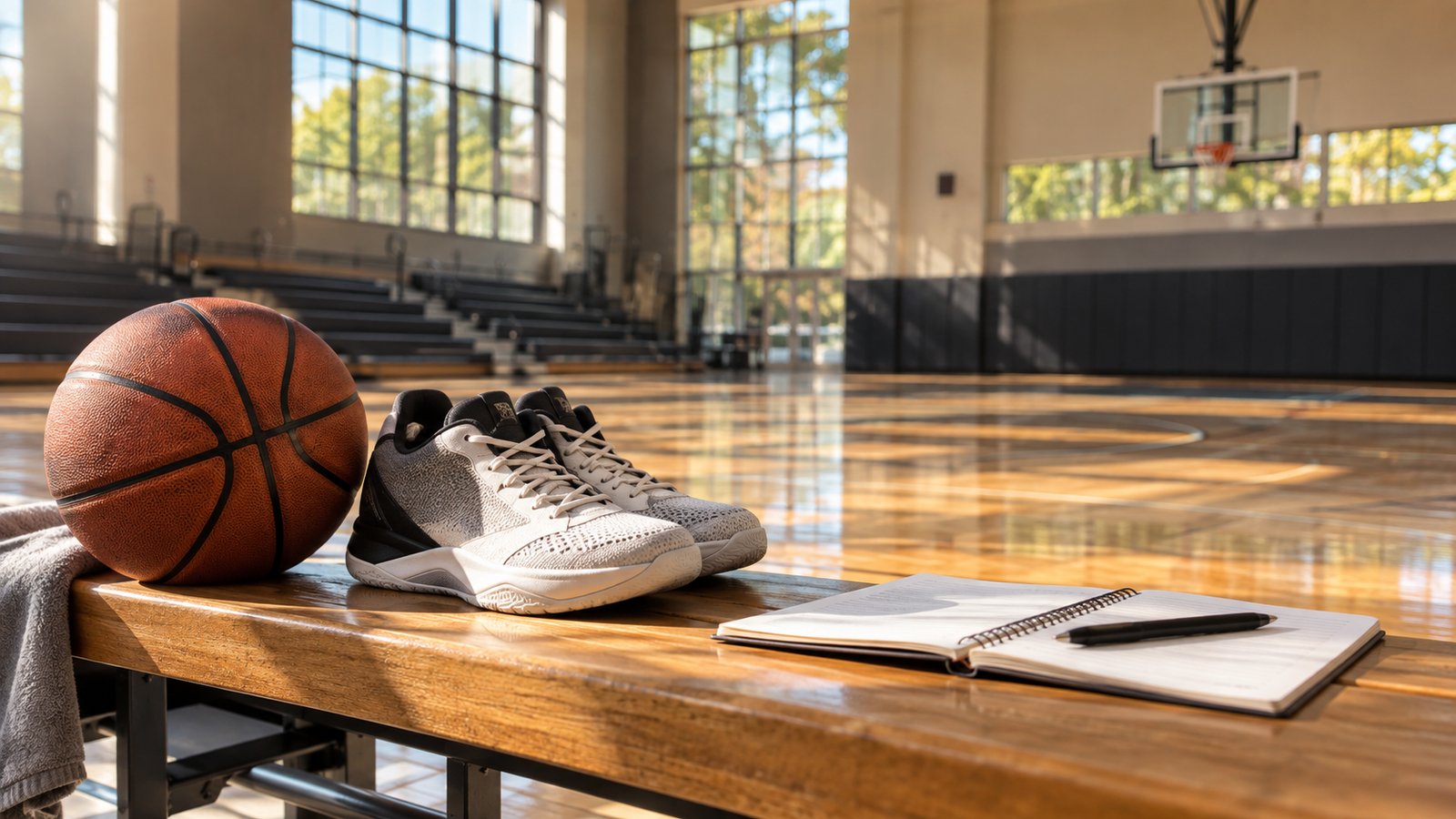
16:9 editorial-style hero image set inside a modern college campus basketball gym. A clean wooden gym bench in the foreground holds a basketball, a pair of modern unbranded basketball shoes, and an open student notebook with a pen. Warm natural sunlight enters through large gym windows, creating soft realistic shadows and a welcoming campus atmosphere. Polished hardwood court and basketball hoop subtly visible in the background with shallow depth of field. Clean, uncluttered composition, realistic photography, natural materials, neutral styling, suitable for a university digital marketing blog. No text, no logos, no visible branding, no celebrity, and no replica or imitation of any specific Nike shoe model.
Final prompt used in OpenAI image generation
Use case: photorealistic-natural. Asset type: 16:9 editorial hero image for a university digital marketing blog about a student basketball shoe buying checklist. Create a realistic photograph set inside a modern college campus basketball gym. A clean wooden gym bench in the foreground holds a basketball, a pair of modern unbranded basketball shoes, and an open student notebook with a pen. Warm natural sunlight enters through large gym windows, creating soft realistic shadows and a welcoming campus atmosphere. Polished hardwood court and basketball hoop subtly visible in the background with shallow depth of field. Clean, uncluttered composition, realistic photography, natural materials, neutral styling. No people, no readable text, no logos, no visible branding, no celebrity, no watermark, and no replica or imitation of any specific Nike shoe model. Wide horizontal 16:9 composition, finished professional editorial quality.
Tool used: the built-in OpenAI image generator through Codex. Leonardo.AI was not used. The assignment introduction says “ChatGPT or Leonardo.AI,” but the required template specifically names Leonardo.AI. This project documents the OpenAI workflow and the actual prompt used.
Result: one 16:9 image was generated and selected after visual review. The scene supports the article’s student setting and illustrates a planning concept; it is not a photograph of an actual Nike product. The selected image is shown below.
Last remarks
The persona helped keep the content focused on a student’s decision process. AI produced useful starting ideas, but it did not validate the persona or keywords. The article avoids current prices and performance promises, and asks readers to check official information. The selected campus gym image connects the buying checklist to Jordan’s student basketball setting. The image-generation tool and prompt are documented above.
Suggested evaluation after publication: compare search impressions and clicks for the article, guide engagement, and LinkedIn link clicks. These are proposed measures, not results. Brand sales or conversion impact cannot be inferred without relevant analytics.
The 500-word count applies only to the generated article above, excluding its title. Process notes, prompts, persona, keywords and LinkedIn copy are separate.
Sources and process record
- Original Nike persona post and its research references
- Nike student-discount information
- Nike on LinkedIn
Text process: ChatGPT, a dedicated Nike conversation started September 27, 2026; outputs reviewed and assembled with Codex. Prompt wording is recorded above. No original interviews, product testing or measured keyword research were performed.